
 By Oscar James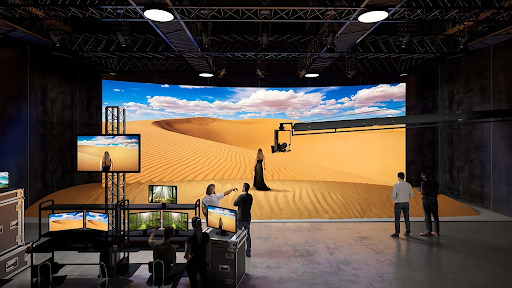
It is changing the way that content creation works, but when it comes to efficiency, this makes all the difference. Real-time rendering, camera tracking, and other elements all need to be in harmony for maximum effectiveness. The inefficiency of systems is something that can cause major problems for business owners and content producers.
Efficiency in virtual production does not simply mean having robust machines. Efficiency includes the proper alignment of all technologies, processes, and production plans for the effective execution of virtual productions.
Building the Right Foundation for Efficiency
Efficient virtual production begins with systems designed to handle real-time demands without interruptions. Solutions like Virtual Production LED Wall Workstations are built to support high-resolution rendering, synchronized playback, and complex scene processing.
These systems ensure that rendering engines, LED processors, and tracking systems operate together without delays. A strong foundation reduces technical issues and allows production teams to focus on execution rather than troubleshooting.
1. Aligning Core Hardware Components
The hardware is one of the main factors that define the performance level of the virtual production process. Powerful GPUs are necessary for rendering operations, whereas multi-core CPUs are responsible for managing other processes within the system.
Rapid memory and NVMe storage provide fast access to big project files. With all hardware elements being optimized, the system becomes capable of processing complicated scenes without any delays.
2. Optimizing LED Walls and Display Systems
LED walls have become an integral component of virtual production sets. The resolution, refresh rate, and luminosity all play an important role in affecting visual quality and performance.
In efficient virtual productions, fine-pitch LED screens are used so that there is no risk of creating any distortions in visuals and achieving smooth visual output. Calibration of the LED wall to the render engine is very important.
3. Ensuring Accurate Camera Tracking
It is important to track real-time camera movements to ensure realistic scenes. Real-time tracking requires accurate capturing of movement and updating the virtual world instantaneously.
A good system reduces the time lag between the camera’s movement and changes made on screen.
4. Synchronization and Genlock Integration
Timing is an important aspect of virtual production. Any discrepancy in synchronization will result in problems such as flicker and tearing.
Genlocking guarantees that all devices – the camera, LED screens, and rendering – function on the same timing signals. It creates consistency within the visuals and enables live streaming during the production process.
5. Streamlining Workflow and Pre-Production
Efficiency is not limited to hardware; it also depends on workflow planning. Pre-visualization and technical visualization help teams plan scenes, camera angles, and lighting before production begins.
This preparation reduces on-set adjustments and speeds up the overall process. Systems like Virtual Production Green Screen Workstations also support flexible workflows, allowing teams to manage chroma-based production environments efficiently without compromising performance.
6. Integrating Lighting for Realistic Output
The role of lighting is very significant in terms of integrating the two aspects. Ambient lighting is possible with the help of LED walls, but there may still be a requirement for further lighting.
Effective configurations of digital and physical lighting ensure that the surroundings are matched properly. Post-production efforts can therefore be minimized significantly.
7. Leveraging Flexible Production Setups
All projects do not necessarily need to have the complete volume of LED. With proper configuration, smaller or combination types can be effective.
It is important to note that flexible settings will enable one to adjust effectively to varying production requirements and maintain efficiency.
8. Managing Data and Storage Effectively
The virtual production process uses massive data in the form of high-res content and real-time rendering files. Data management becomes crucial to ensuring performance.
Having high-speed storage systems guarantees fast data retrieval and playback without delay. Proper file organization also prevents latency and enhances teamwork.
9. Building a Skilled Production Team
Efficiency can never be achieved solely through technology. A competent workforce is necessary for the effective management and operation of virtual production systems.
The roles of technical directors, virtual art departments, and production staff guarantee proper configuration and maintenance of the systems. Communication among the workers also increases efficiency.
10. Planning for Scalability and Growth
Efficient setups should be designed with future needs in mind. As production requirements grow, systems must be able to scale without major disruptions.
Expandable hardware and flexible configurations allow teams to adapt to new technologies and larger projects. This approach ensures long-term efficiency and cost-effectiveness.
Driving Better Outcomes Through Efficient Virtual Production
Efficiency in virtual production is achieved through a combination of optimized hardware, streamlined workflows, and precise synchronization. When these elements are aligned, production teams can deliver high-quality content with greater speed and consistency.
Major providers such as Sony and ROE Visual offer advanced virtual production technologies, but their solutions often focus on hardware components rather than complete workflow integration. This can create challenges for teams seeking a fully optimized setup.
Cloud Ninjas provides a more balanced approach by delivering systems tailored to real production environments. Compared to broader solutions from companies like ARwall or disguise, these configurations are designed to improve efficiency, simplify workflows, and support consistent performance across virtual production projects.