
 By Oscar James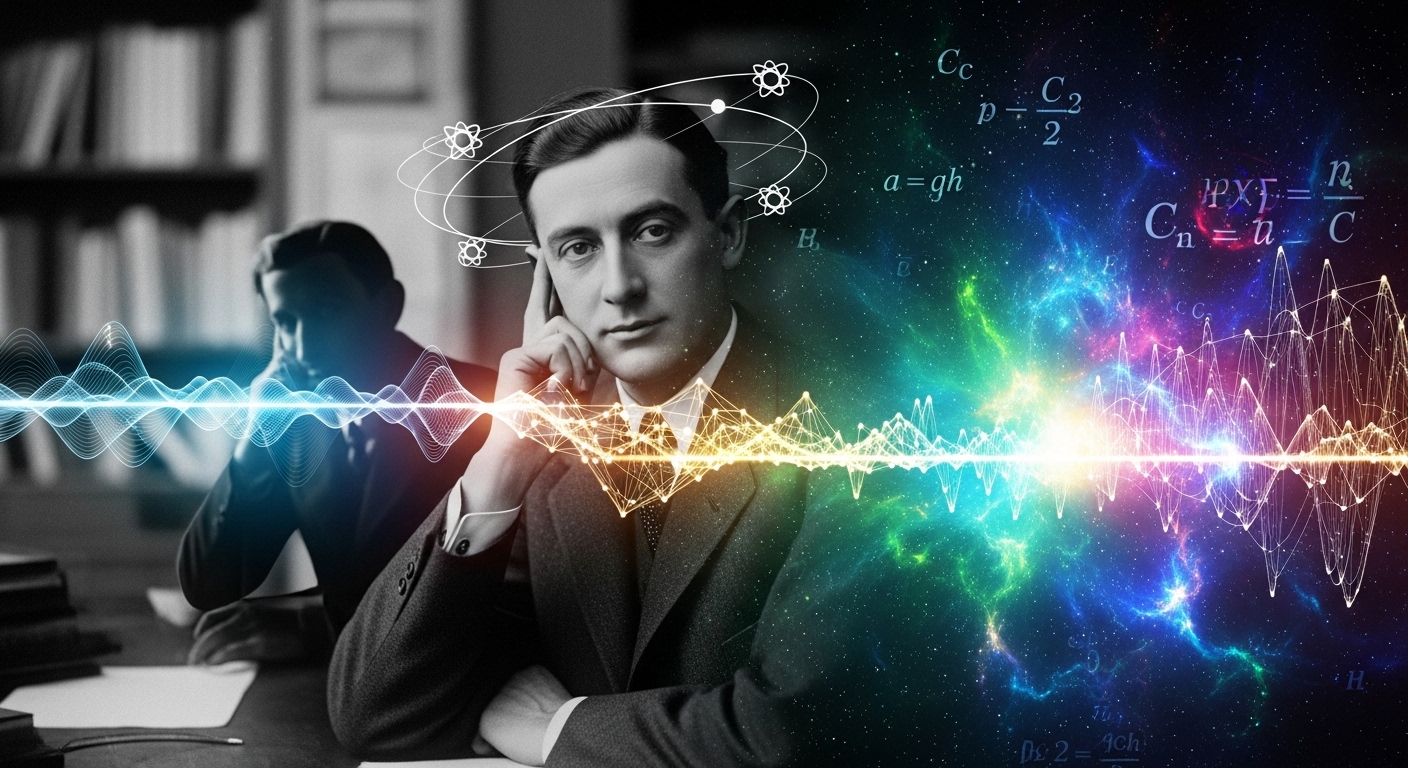
Daniel Broglie is a name that resonates deeply within the realms of physics. His groundbreaking ideas laid the foundation for our understanding of quantum mechanics, forever changing how we perceive the universe. With roots in classical physics, Broglie’s theories challenge traditional notions and invite us to rethink reality at its most fundamental level.
Imagine a world where particles behave like waves and waves dance with unpredictability. This is precisely what Broglie proposed—a bridge between two seemingly disparate worlds: classical physics and quantum reality. As we delve into his life, work, and enduring legacy, you’ll discover why Daniel Broglie’s contributions continue to inspire scientists today and fuel curiosity about the mysteries of existence.
Who is Daniel Broglie?
Louis de Broglie, a French physicist born in 1892, is best known for his groundbreaking work that merged classical physics with quantum mechanics. He was the first to propose that particles such as electrons exhibit wave-like properties. This concept fundamentally altered how we perceive matter at the atomic level.
Broglie’s interest in physics blossomed during his studies at the University of Paris. His innovative ideas emerged during a time when scientists grappled with understanding quantum phenomena. De Broglie’s most significant contribution came in 1924, presenting his hypothesis on wave-particle duality.
His insights paved the way for future research and opened doors to modern quantum theory. In recognition of his achievements, he received the Nobel Prize in Physics in 1929. Through persistence and creativity, Daniel Broglie reshaped our understanding of reality itself.
The Connection between Classical Physics and Quantum Mechanics
Classical physics and quantum mechanics sit at opposite ends of the scientific spectrum. Classical physics, governed by Newton’s laws, explains macroscopic phenomena with precision. It thrives in our everyday experiences, from the motion of planets to the behavior of simple machines.
Quantum mechanics, on the other hand, steps into a world where particles dance unpredictably. Here, uncertainty reigns supreme; a particle can exist in multiple states until observed. This stark contrast often leaves students and researchers puzzled.
Yet these two realms are intrinsically linked through concepts like wave-particle duality. This idea suggests that particles such as electrons exhibit both wave-like and particle-like properties depending on how they’re measured.
Broglie’s hypothesis plays a crucial role here, suggesting that all matter has associated waves. By recognizing this connection between classical behaviors and quantum intricacies, scientists have begun reshaping our understanding of reality itself.
Broglie’s Contributions to Understanding the Two Concepts
Daniel Broglie’s groundbreaking work introduced the concept of wave-particle duality. This idea transformed how scientists perceive particles at a quantum level. He proposed that matter, much like light, exhibits both particle and wave characteristics.
His famous equation, λ = h/p, links wavelength with momentum. This fundamental relationship paved the way for deeper exploration into quantum mechanics.
Broglie’s insights helped bridge classical physics and quantum theory. They invited physicists to rethink traditional concepts of mass and energy. His theories prompted new experimental approaches to understanding atomic behavior.
By viewing electrons as waves rather than mere particles, Broglie opened doors to revolutionary technologies such as electron microscopy. These advancements have had lasting effects across various fields of science and technology today.
Real-World Applications of Broglie’s Theories
Broglie’s theories have profound implications in various fields. His concept of wave-particle duality bridges the gap between classical and quantum mechanics, revolutionizing how we perceive matter.
In technology, his ideas underpin advancements in electron microscopy. This application allows scientists to observe structures at atomic scales, enhancing our understanding of materials and biological systems.
Furthermore, Broglie’s principles are foundational in quantum computing. They enable the development of qubits that can exist in multiple states simultaneously, vastly increasing computational power.
Medical imaging techniques also benefit from his work. Techniques like MRI leverage quantum properties to produce detailed images of soft tissues within the human body.
Research into nanotechnology often incorporates Broglie’s insights. By manipulating particles at small scales, researchers create innovative materials with unique properties for diverse applications ranging from electronics to renewable energy sources.
Criticisms and Controversies Surrounding Broglie’s Work
Daniel Broglie’s theories, while groundbreaking, were not free from criticism. Some physicists questioned his wave-particle duality concept. They found it difficult to reconcile with existing classical mechanics.
One significant controversy arose around the interpretation of matter waves. Critics argued that such a notion seemed abstract and lacked tangible evidence. This skepticism fostered heated debates within scientific communities.
Additionally, Broglie’s ideas often clashed with established quantum theory frameworks. His views on pilot-wave theory sparked further contention among scholars who favored more conventional interpretations like Copenhagen or many-worlds.
Despite these disagreements, Broglie’s work encouraged intense exploration into the nature of reality at microscopic levels. While some dismissed him as overly speculative, others recognized the potential for profound insights into physics’ deeper layers through his contributions.
Impact on Modern Science and Future Possibilities
Daniel Broglie’s work has had a profound impact on modern science. His wave-particle duality concept reshaped our understanding of matter and energy. This realization paved the way for advancements in quantum mechanics, influencing fields such as chemistry and material science.
The implications extend beyond theoretical physics. Technologies like semiconductors and lasers rely heavily on principles derived from Broglie’s theories. These innovations have transformed everyday life, from smartphones to medical devices.
Looking ahead, Broglie’s insights could lead to breakthroughs in quantum computing and cryptography. As researchers explore quantum phenomena further, they may unlock new potentials that were once thought impossible.
Broglie’s legacy continues to inspire scientists today as they push boundaries of knowledge. The questions he raised remain relevant as we delve deeper into the mysteries of the universe, guiding future explorations in both fundamental research and practical applications.
Daniel Broglie’s Legacy in Bridging the Gap between Classical Physics and Quantum Reality
Daniel Broglie’s legacy is a cornerstone in the evolution of physics. His introduction of wave-particle duality reshaped our understanding of matter and energy. This concept opened doors to explore phenomena that were once deemed impossible.
Broglie’s work laid the groundwork for quantum mechanics, influencing brilliant minds like Schrödinger and Heisenberg. By suggesting that particles can exhibit both particle-like and wave-like properties, he challenged the rigid boundaries set by classical physics.
His theories not only transformed scientific thought but also sparked innovations across various fields. Technologies such as lasers and semiconductors owe their existence to insights derived from his principles.
Today, researchers continue to build on Broglie’s ideas, delving deeper into the fabric of reality itself. The interplay between classical physics and quantum theory remains a vibrant area of exploration, thanks in large part to Broglie’s pioneering spirit.
Conclusion
Daniel Broglie’s work and theories significantly advanced the understanding of both classical physics and quantum mechanics. His introduction of wave-particle duality reshaped how scientists perceive matter and energy, providing a framework that continues to influence modern physics today.
Broglie’s legacy serves as a bridge between two seemingly contrasting realms. His efforts not only paved the way for future physicists but also opened doors for countless technological advancements in various fields. From electronics to quantum computing, his insights have permeated many aspects of contemporary life.
The ongoing exploration inspired by Broglie’s ideas showcases the vibrant interplay between established concepts and revolutionary thought in science. As we delve deeper into the mysteries of reality, Daniel Broglie’s contributions remain a testament to human curiosity and intellect—a reminder that while our understanding evolves, some foundational principles endure through time.